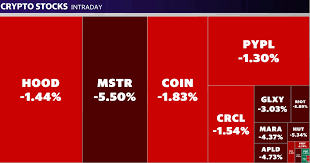
Image Source: Yahoo Finance
In a turbulent day for the crypto market, Bitcoin (BTC-USD) has dipped below the $110,000 mark, reflecting a broader sell-off that has also affected stocks. This decline, exceeding 3%, comes amidst troubling market sentiment and increasing selling pressure, particularly on cryptocurrencies like Ethereum (ETH-USD) and Solana (SOL-USD).
The latest fall occurred on Thursday, September 25, 2025, as Bitcoin’s price showed signs of weakness, driven by a combination of factors. Ethereum, in a similar vein, has reported a drop of nearly 5%, falling beneath $3,900 for the first time since August, further emphasizing the instability within the cryptocurrency sector. Analysts suggest this may be a reaction to significant net outflows in Ethereum exchange-traded funds (ETFs) over the last 24 hours.
Understanding the Current Crypto Market Dynamics
Samer Hasn, a Senior Market Analyst at XS.com, attributes this ongoing downturn to a lack of buying momentum needed to counteract the bearish trend following last week’s massive liquidations. Over 1.6 billion dollars worth of long positions were liquidated earlier in the week, leading to a retraction in investor confidence. Recently, approximately $511 million of liquidations occurred across various crypto assets in just 24 hours, which played a critical role in leading the market downwards.
Such a drastic market drop aligns with a broader seasonal trend seen in September, which has historically been a volatile month for cryptocurrencies. Market strategists have noted that the end of the year often leads to improved market conditions, giving hope to crypto bulls for a rebound.
The Impact of Higher Interest Rates and Market Caution
This bearish sentiment is further compounded by uncertainty regarding the Federal Reserve’s trajectory on interest rates. Many investors express concern over the perceived “froth” within the market, primarily fueled by enthusiasm around artificial intelligence and potential ripple effects across financial sectors.
Moreover, investors are currently closely monitoring government actions that might affect liquidity in the market. The U.S. Treasury has been active in replenishing its General Account, which has resulted in further liquidity pressures on crypto assets. This strategic maneuver includes issuing T-bills and bonds, diverting cash away from investment in riskier assets like Bitcoin.
Market Responses and Stock Movements
The repercussions of this crypto decline can be observed across various sectors, especially in stocks closely tied to the cryptocurrency market. Trading platforms like Robinhood (HOOD) and Coinbase (COIN) have seen their stocks fall over 1% as investors react to the declining prices in digital currencies.
Market sentiment remains fragile, and many are left questioning whether this downward trend will persist or if a recovery is on the horizon. The coming weeks will be critical as traders assess both economic indicators and investor sentiment across the cryptocurrency landscape.
What’s Next for Crypto Investors?
As the market navigates through these turbulent times, it remains essential for investors to remain informed and evaluate their strategies accordingly. Understanding the underlying mechanics of market movements and potential government influences will be crucial for navigating the uncertainties ahead in the crypto space.
Conclusion: A Cautious Outlook on Crypto
The current market behavior indicates a need for caution among investors in cryptocurrencies like Bitcoin and Ethereum. With prices shifting rapidly and investor sentiment wavering, the future of digital currencies seems clouded in uncertainty. As the market adjusts to these changes, it is essential for traders to stay informed and prepared for further volatility.
FAQs About the Current Crypto Market
What caused Bitcoin’s drop below $110,000?
The recent drop is attributed to a sell-off driven by a lack of buying power, massive liquidations, and concerns surrounding the Federal Reserve’s interest rate policies.
Are Ethereum ETFs experiencing significant outflows?
Yes, Ethereum ETFs have seen net outflows, contributing to the declining prices for Ethereum and adding to market instability.
What historical trends affect crypto markets in September?
September has historically been a volatile month for cryptocurrencies, with traders often experiencing significant fluctuations during this period.
How do government actions influence cryptocurrency liquidity?
Government actions, such as issuing bonds and T-bills, can reduce liquidity in the crypto market, as funds are redirected from riskier assets to safer government securities.
What should investors consider during market downturns?
Investors should stay informed, reassess their strategies, and consider potential recovery opportunities as market sentiment shifts.
Like this:
Like Loading...
