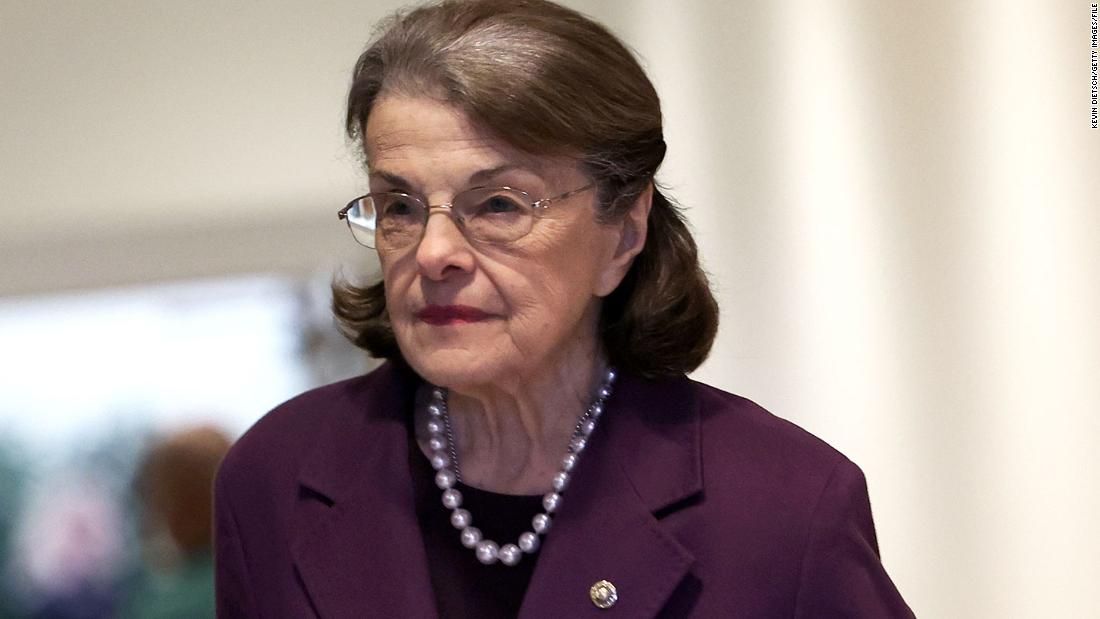
Image Source: CNN US
The political landscape in the Senate has recently become tumultuous as Republicans have formally blocked a request from Senate Majority Leader Chuck Schumer to temporarily replace Senator Dianne Feinstein on the Judiciary Committee. This move comes at a critical time as Senate Democrats seek to advance stalled judicial nominations while Feinstein is out recovering from shingles.
Feinstein’s absence has raised significant concerns, as her position on the powerful Judiciary Committee is crucial for moving forward with a variety of judicial nominees. With her still unclear return date, Senate Republicans have ramped up pressure on the 89-year-old Democrat to either resign or return to her duties expediently.
As it stands, Democrats have pushed to replace Feinstein temporarily due to her ongoing health issues. Feinstein had humbly requested to be replaced while she recovers, but the Republicans, led by Senator Lindsey Graham, have made it unequivocally clear that they would not support such a measure. “With all due respect, my colleague, Senator Schumer, this is about a handful of judges that you can’t get the votes for,” Graham stated during the debate.
Republicans Firmly Oppose Replacement
Schumer attempted to garner support for his motion by highlighting his long-standing friendship with Feinstein, as well as her past accomplishments within the Senate. He expressed heartfelt sentiments, emphasizing his role as an advocate for her during this challenging time. However, despite his appeals, senior Republican leadership has rejected his request outright.
Senator John Cornyn, a Republican member of the Judiciary Committee, articulated strong opposition to Feinstein’s temporary replacement, referring to the ongoing effort as a maneuver to confirm what he termed “controversial and largely unqualified nominees.” This sentiment has solidified Republican barricades against any attempts from the Democrats to replace Feinstein while she is out.
Impact on Judicial Nominations
The implications of this stalemate are substantial. If Feinstein remains absent without a replacement, at least a dozen judicial nominees, if not more, may remain stalled. This could significantly hamper the Democrats’ legislative agenda, both on the Judiciary Committee and the Senate floor.
In the wake of these developments, some congressional Democrats have voiced their support for Feinstein’s decision to stay in office, even as she is unable to contribute actively. However, calls for her resignation might multiply should Democrats be unable to find a temporary replacement or if Feinstein does not return to Washington promptly.
Feinstein’s Future in the Senate
Dianne Feinstein, who had previously announced she would not seek re-election, initially planned to return to the Senate by the end of March. Unfortunately, her recovery has been prolonged. During a recent press conference, Schumer conveyed optimism regarding her imminent return, stating, “I spoke to Senator Feinstein just a few days ago, and she and I are both very hopeful that she will return very soon.”
However, the clock is ticking, and senior Democrats like Senate Judiciary Chairman Dick Durbin have acknowledged that Feinstein’s absence has undoubtedly slowed down the party’s efforts to confirm judicial nominees. He expressed hope for a temporary arrangement that could facilitate the committee’s work in Feinstein’s absence.
As deliberations continue, the necessity for bipartisan cooperation becomes increasingly evident. The Democrats require at least 60 votes to replace Feinstein, and given the current political climate, persuading Republicans to assist may prove challenging.
Conclusion: A Wait-and-See Situation
The situation surrounding Senator Dianne Feinstein and her position on the Judiciary Committee has emerged as a flashpoint within Senate politics. Party lines have drawn stark contrasts as the GOP appears resolved to block any efforts to replace her, thereby stalling the confirmation of critical judicial nominees. The coming weeks will be crucial as Democrats hope for Feinstein’s swift return, but without a break in partisan opposition, the path forward remains uncertain.
FAQs
Why is Feinstein absent from the Senate?
Feinstein is recovering from shingles, which has delayed her ability to return to work.
What are the implications of Feinstein’s absence?
Her absence may stall numerous judicial nominations and impede the legislative agenda for Democrats within the Senate.
What are Republicans’ reasons for blocking her replacement?
Republicans argue that the attempt to replace Feinstein is merely a strategy by Democrats to push through judicial nominees who lack qualifications.
Will Feinstein return soon?
As per current statements, Feinstein plans to return as soon as her medical team advises that it is safe for her to do so.
What happens if Feinstein does not return soon?
If she does not return, calls for her resignation may increase, and Democrats may struggle to secure votes for judicial confirmations.
